What makes “women’s fit” backpacks different?
- They have shorter, narrower, more S-shaped curved shoulder straps.
- They are shorter. If they have metal frames, the frames are also shorter.
- If they have torso height adjustment, the range shifts downwards.
- If they have hipbelts, they have more of a canted, flared angle for comfort on wider hips.
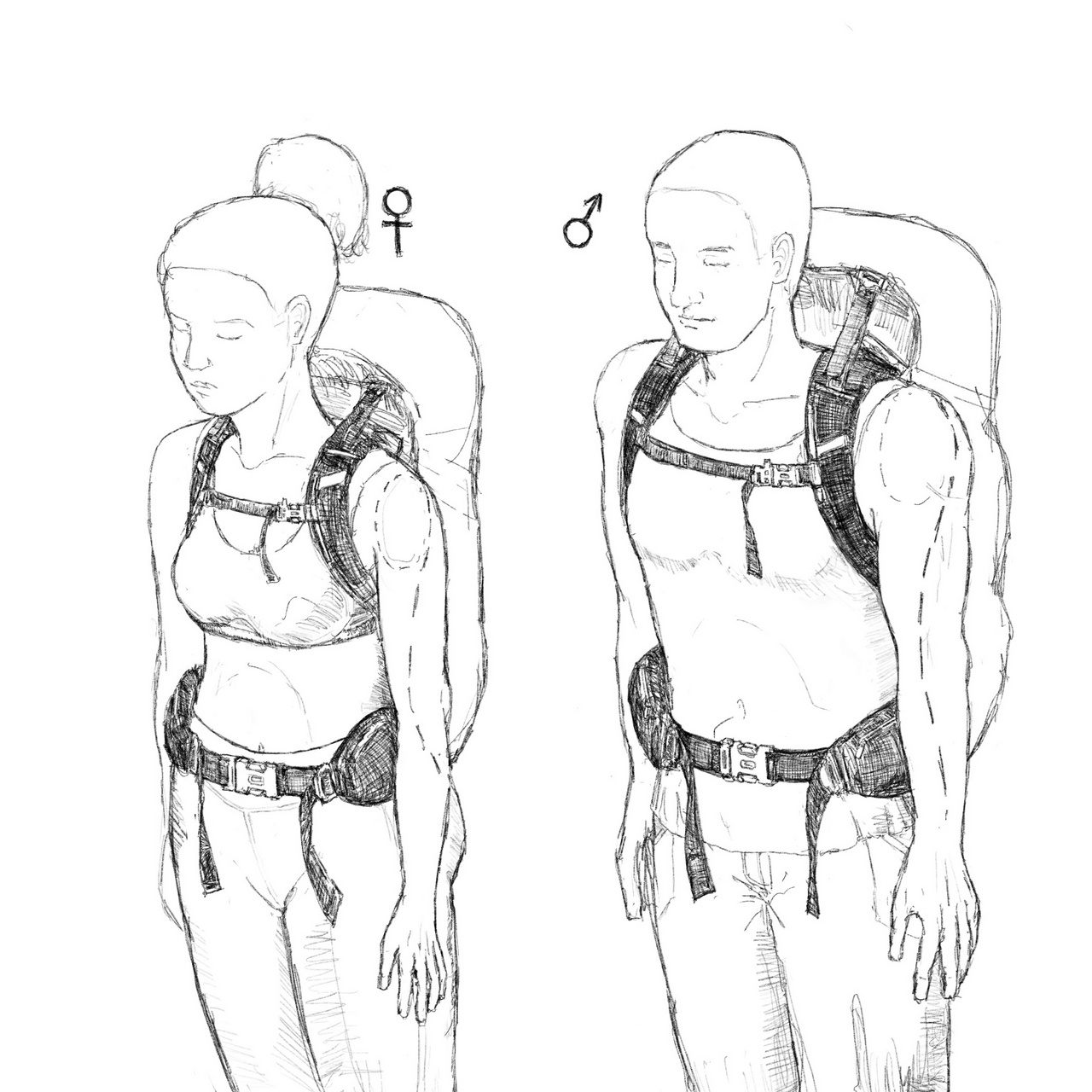
Often, “unisex” backpacks don’t work well for the smaller adult women. Usually, women should try on a women’s fit backpack first, before trying unisex or men’s fit options. If women’s specific fit models are not available, try Osprey unisex fit. However, regardless of your sex or gender, go with whichever backpack model is most comfortable for you.
Note on trans-inclusivity: the manufacturers continue to label these as “men’s” and “women’s” backpacks, though they really mean AMAB and AFAB. You should generally start with trying on a backpack with the fit that is closest to your assigned sex at birth. If you are a physically very small person, and AFAB/women’s fit backpacks are not available, Osprey usually designs the best true unisex fit for such people.
Note on size-inclusivity: if you are on the bigger side, Gregory offers more generous sizing by default. Additionally, Osprey offers models with “Extended Fit,” denoted by an “EF” on the model name, and Gregory offers “Plus Size” models.