How should my backpack fit?
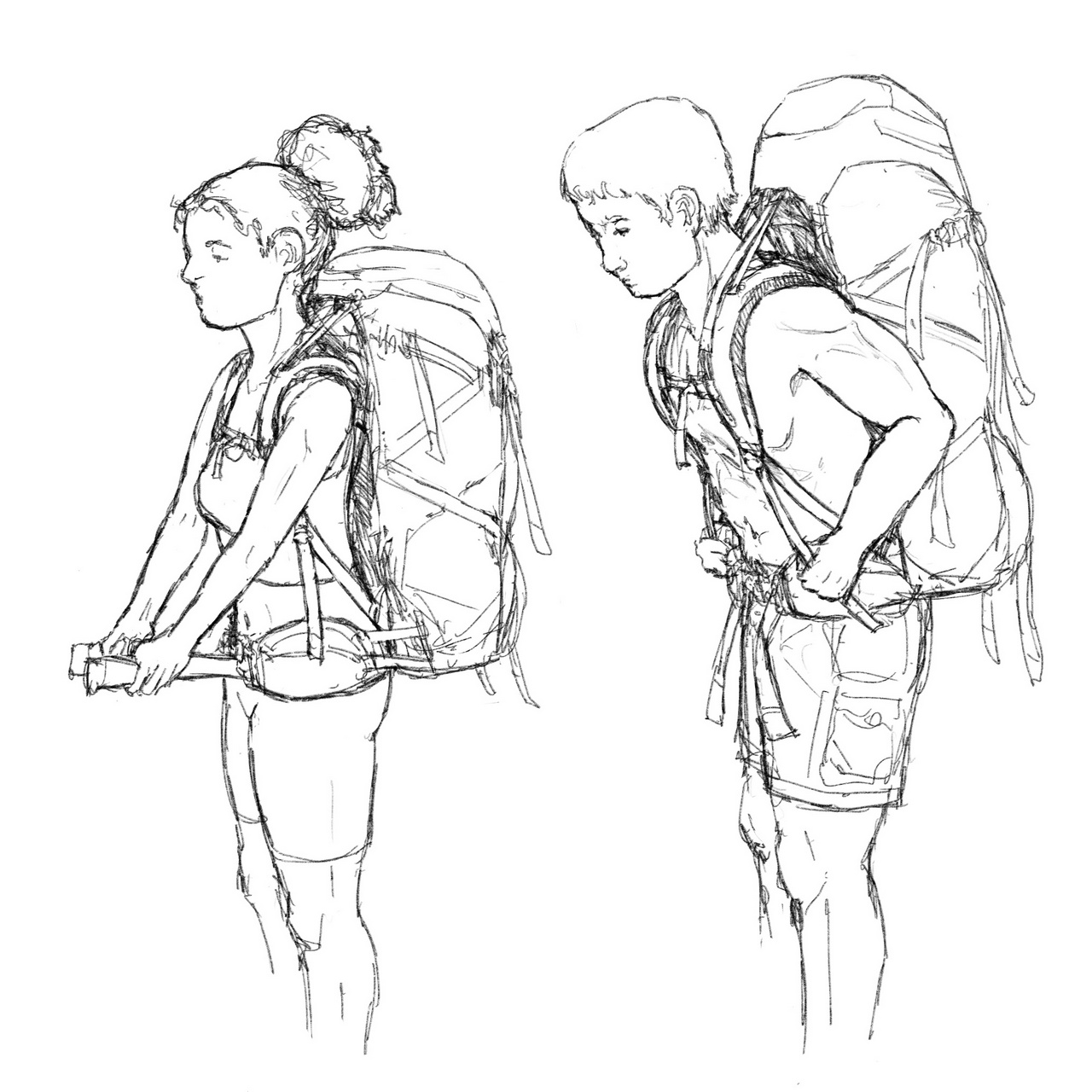
It can be difficult to get your backpack to fit perfectly. The best thing to do is to head to your closest MEC, REI, or other outfitter, and have the pack fitting done professionally. Otherwise, here’s what you should be looking for:
- The shoulder straps and back panel should sit comfortably and snugly against your shoulders, chest, and pack. If the backpack is the correct size, and the straps are not overtightened, there should be no pinching of the straps, or air gaps between your skin and the backpack.
- The sternum strap should have only the smallest amount of tension, as it is not meant to be a load-bearing strap. Its only purpose is to stabilize the shoulder straps and prevent them from sliding off the sides. The height adjustment should be midway between bottom of the collar bone and the widest part of your chest. Some variation is acceptable. If this is backpack with no hipbelt (so, most office/school backpacks), you can ignore the remaining steps.
- The hipbelt is in the most important part. Ideally, the middle of the padding should cover the top of the hipbone (specifically, the highest point of the pelvis, the iliac crest). It should be tightened as much as possible without causing pain. For most people, this means the buckle will close slightly (2-3cm, 1-1½”) below the navel, or where the button would be on a pair of mid-rise jeans. The goal is to achieve 70% weight distribution on the hips and 30% on the back and shoulders. Higher ratios are fine, as long as the backpack is not sitting too loosely that it starts to sway on your body. If this ratio cannot be achieved, 55%/45% is acceptable. If you have an extreme hip-to-waist ratio, congratulations! But, the downside is that some hipbelts with ride up, even when loaded with weight. If this applies to you, try to keep the hipbelt as low as possible, and adjust it as best you can.
- If there are load lifters, they should be pulled until they stabilize the load near the top of the packbag, without becoming uncomfortable. The exact angle will be different on different models, due to the large range of possible frame lengths, but in general it should never feel so tight that it starts putting pressure back on the chest.
- Most framed hiking backpacks, especially those with more than 30L of capacity, will have an adjustable torso length. The exact mechanism varies by model, but most common is breaking the contact between Velcro panel that the shoulder straps are connected to and the rest of the backpack and sliding it into a new position. Change the torso length if all other adjustments don’t get you to the right fit. If it still doesn’t fit, either try a different size of the same backpack if multiple sizes are available. Finally, try a different model altogether.
- If following this fitting process doesn’t feel comfortable, do whatever feels the most natural. In all cases where your comfort conflicts with the standard fitting advice, what feels the most right to you overrides any textbook instruction.